Compare Strategies
| SHORT PUT LADDER | SHORT STRADDLE | |
|---|---|---|
|
|
|
| About Strategy |
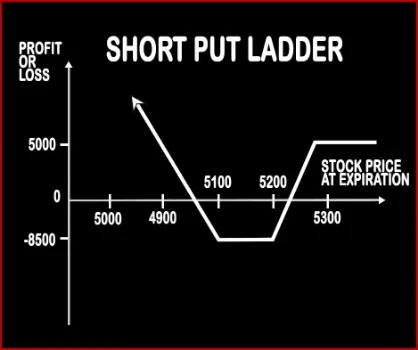
Short Put Ladder Option StrategyThis strategy is implemented when a trader is slightly bearish on the market. A trader is required to be bullish over the volatility in the market. It involves sale of an ITM Put Option and buying of 1 ATM & 1 OTM Put Options. However, the risk associated with this strategy is limited.
|
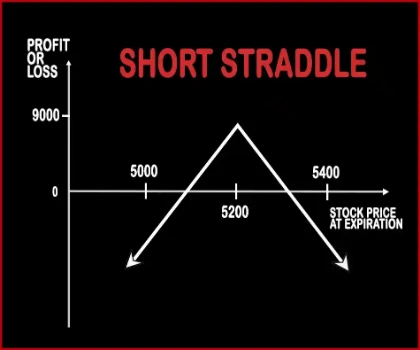
Short Straddle Option strategyThis strategy is just the opposite of Long Straddle. A trader should adopt this strategy when he expects less volatility in the near future. Here, a trader will sell one Call Option & one Put Option of the same strike price, same expiry date and of the same underlying asset. If the stock/index hovers around the same levels then both the options will expire worthless an .. |
SHORT PUT LADDER Vs SHORT STRADDLE - Details
| SHORT PUT LADDER | SHORT STRADDLE | |
|---|---|---|
| Market View | Neutral | Neutral |
| Type (CE/PE) | PE (Put Option) | CE (Call Option) + PE (Put Option) |
| Number Of Positions | 3 | 2 |
| Strategy Level | Advance | Advance |
| Reward Profile | Unlimited | Limited |
| Risk Profile | Limited | Unlimited |
| Breakeven Point | Upper Breakeven Point = Strike Price of Short Put - Net Premium Received Lower Breakeven Point = Total Strike Prices of Long Puts - Strike Price of Short Put + Net Premium Received | Lower Breakeven = Strike Price of Put - Net Premium, Upper breakeven = Strike Price of Call+ Net Premium |
SHORT PUT LADDER Vs SHORT STRADDLE - When & How to use ?
| SHORT PUT LADDER | SHORT STRADDLE | |
|---|---|---|
| Market View | Neutral | Neutral |
| When to use? | This strategy is implemented when a trader is slightly bearish on the market. | This strategy is work well when an investor expect a flat market in the coming days with very less movement in the prices of underlying asset. |
| Action | Sell ITM Put Option, Buying 1 ATM & 1 OTM Put Option. | Sell Call Option, Sell Put Option |
| Breakeven Point | Upper Breakeven Point = Strike Price of Short Put - Net Premium Received Lower Breakeven Point = Total Strike Prices of Long Puts - Strike Price of Short Put + Net Premium Received | Lower Breakeven = Strike Price of Put - Net Premium, Upper breakeven = Strike Price of Call+ Net Premium |
SHORT PUT LADDER Vs SHORT STRADDLE - Risk & Reward
| SHORT PUT LADDER | SHORT STRADDLE | |
|---|---|---|
| Maximum Profit Scenario | When Price of Underlying < Total Strike Prices of Long Puts - Strike Price of Short Put + Net Premium Received | Max Profit = Net Premium Received - Commissions Paid |
| Maximum Loss Scenario | Strike Price of Short Put - Strike Price of Higher Strike Long Put - Net Premium Received + Commissions Paid | Maximum Loss = Long Call Strike Price - Short Call Strike Price - Net Premium Received |
| Risk | Limited | Unlimited |
| Reward | Unlimited | Limited |
SHORT PUT LADDER Vs SHORT STRADDLE - Strategy Pros & Cons
| SHORT PUT LADDER | SHORT STRADDLE | |
|---|---|---|
| Similar Strategies | Strap, Strip | Short Strangle |
| Disadvantage | • Best to use when you are confident about movement of market. • Small margin required. | • Unlimited risk. • If the price of the underlying asset moves in either direction then huge losses can occur. |
| Advantages | • When there is surge in implied volatility, this strategy can give more profit. • Unlimited downside profit. • Limited risk and unlimited reward strategy. | • A trader can earn profit even when there is no volatility in the market . • Allows you to benefit from double time decay. • Trader can collect premium from puts and calls option . |